Ben Young Landis 楊政達
November 11, 2026
What are some classic #SciComm #科普 principles we can all keep in our toolkit? As a science communication professional who organizes science café events, I am always noticing moments of brilliance from our speakers.
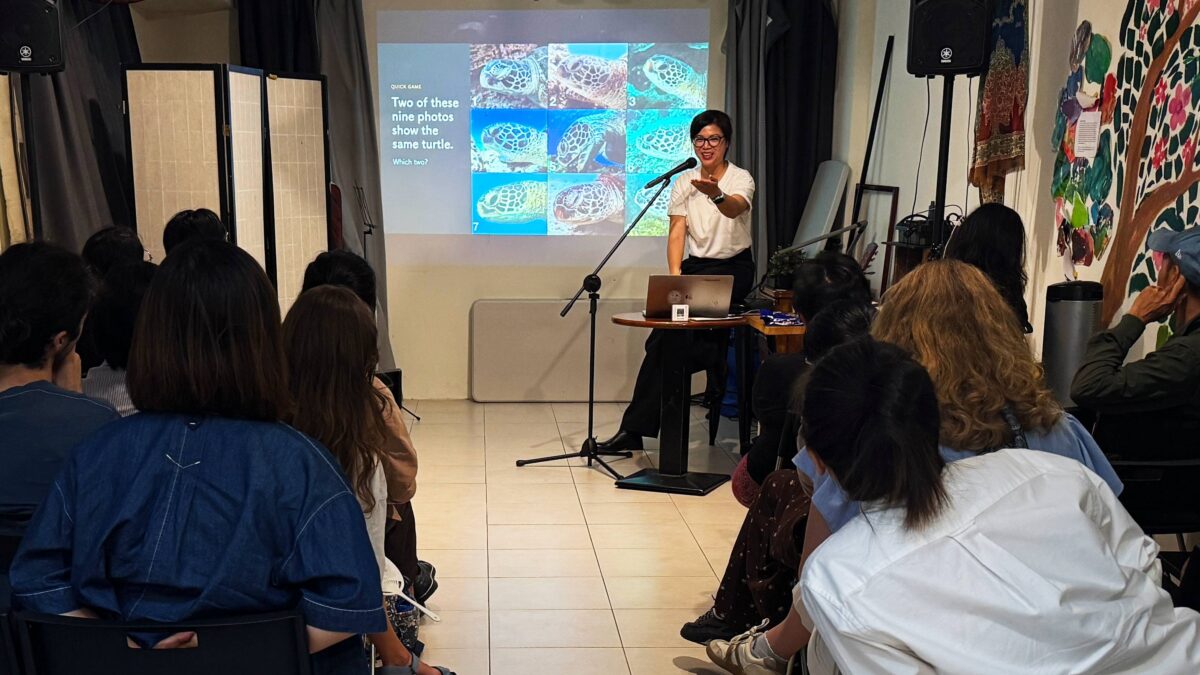
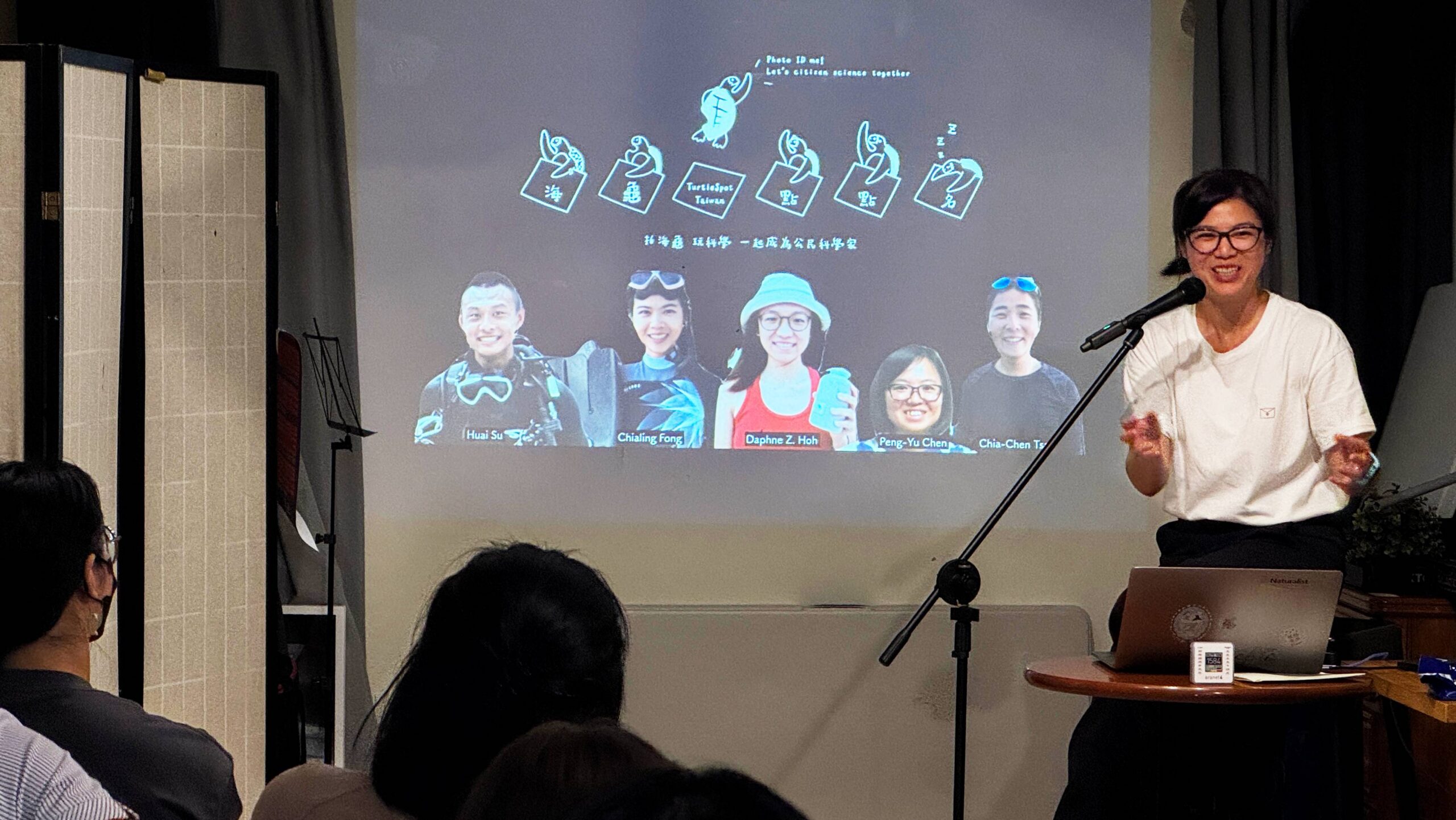
Here are my three observations from our recent Taipei Science Café 台北科普咖啡 hosted at DAYBREAK 破曉咖啡 by New Bloom (www.instagram.com/taipeisciencecafe) — featuring TurtleSpot Taiwan 海龜點點名 co-founder and current President-Elect of the International Sea Turtle Society Dr. Chialing Fong 馮加伶 (https://orcid.org/0000-0003-1862-9993), who delighted us on the topic of Sea Turtles 海龜:
Three Things You Want Your Audience to Remember
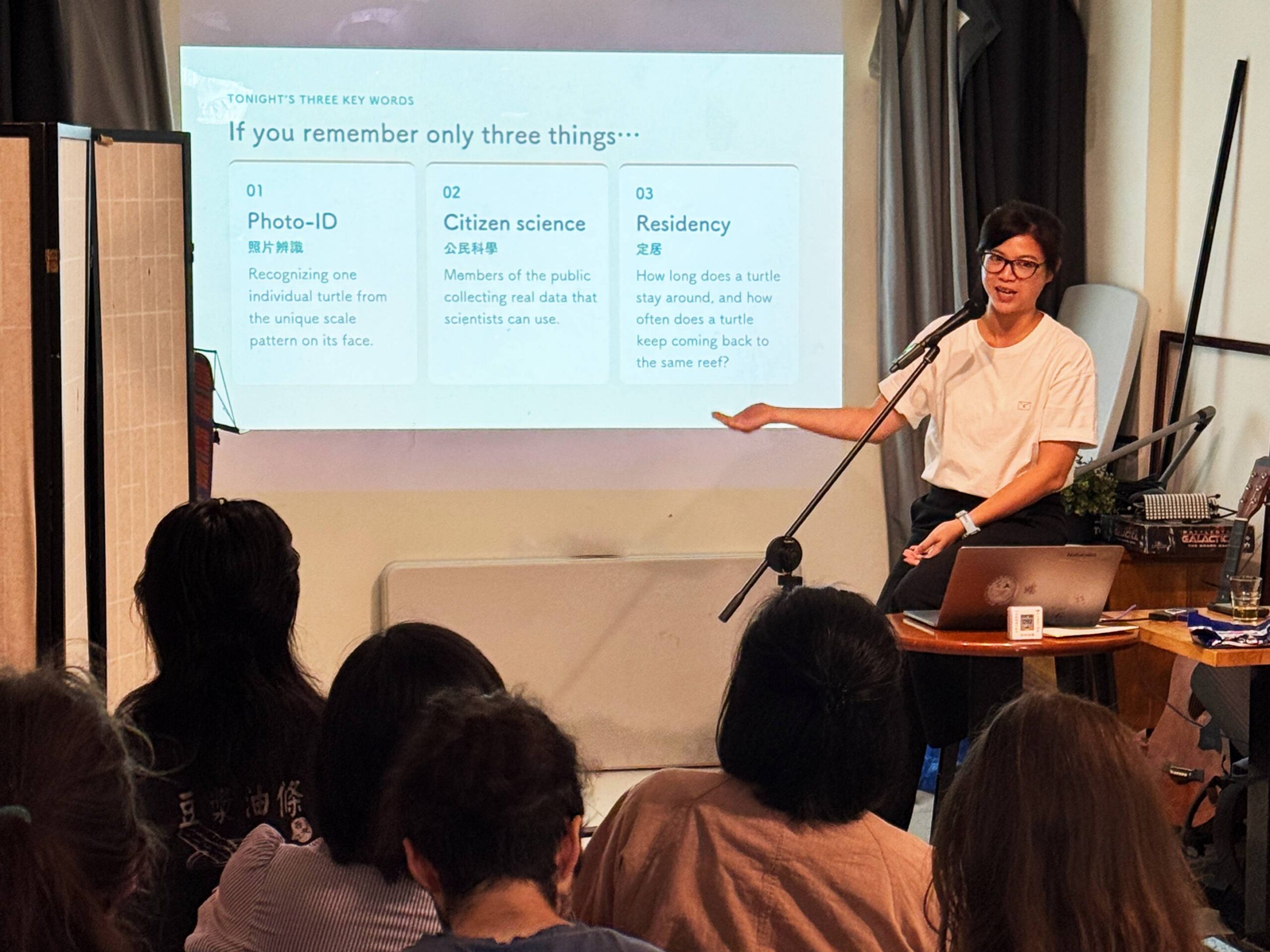
When teaching my “Connecting with Your Audience” science communication worksheet, I emphasize this point in every class: keep it to three talking points. Condensing your overall research into three priority points can help you as the speaker focus your own delivery — and keeps things simple for your audience to remember.
Dr. Fong did just that! Right at the beginning of her science café talk, she presented her “If you remember only three things…” and explained each concept succinctly and at the level of most people’s general understanding. Dr. Fong even added nuance to jargon, taking extra care to explain that the term “citizen science” does not refer to the geopolitical meaning of the word “citizen” — but simply that it is a participatory, community-powered activity.
This opening slide was super useful — and served as the overarching outline for the evening’s conversation, with Dr. Fong reinforcing these three concepts (photo ID, citizen science, residency) as we progressed through the presentation.
(Sidebar for my North American readers: We have to be mindful that the term “citizen science” in other languages and settings does not immediately carry the unfortunate burden that it does in U.S. contexts, where the terms “community science” or “participatory science” are recommended. While the Taiwan academic jargon of 公民科學 is a literal translation of the words “citizen” and “science” — and Taiwan certainly has its own socio-political conundrums related to citizenship and immigration — the term itself doesn’t carry the same affectation as it does in the United States. So if anything, Dr. Fong went above and beyond in even educating our guests on the extra nuance!)
Metaphors, Analogies, and Clever Catchphrases
Also in my “Connecting with Your Audience” scicomm workshop, I encourage researchers to come up with metaphors, analogies, and clever catchphrases as substitutes or explanations for scientific jargon. Chialing, being the seasoned science educator she already is, used a ton of these helpful tricks in her Taipei Science Café talk:
- Mentioning ping-pong balls to describe the shape and size of sea turtle eggs. (Table tennis remains very popular in Taiwan.)
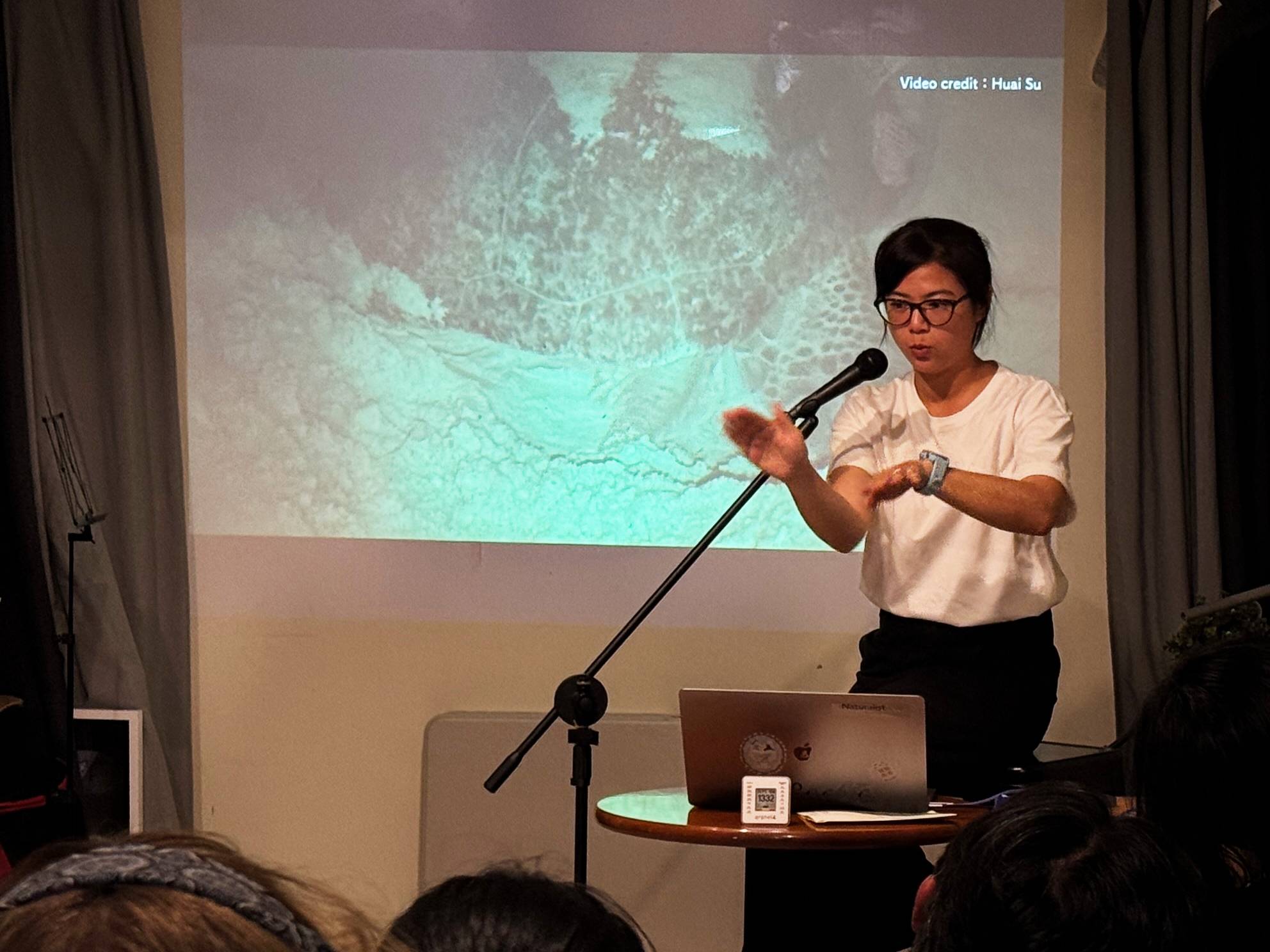
- “You know how you scoop ice cream after your hotpot?” Chialing said that line as she compared the nest-digging action of mother sea turtle hind limbs to ice cream scoops digging into the sand, even gesturing her hands as flippers. This is a very specific local reference because most Taiwan hotpot restaurants offer self-service, all-you-can eat ice cream as a dessert perk — a perfect allusion for our Taipei Science Café audience.
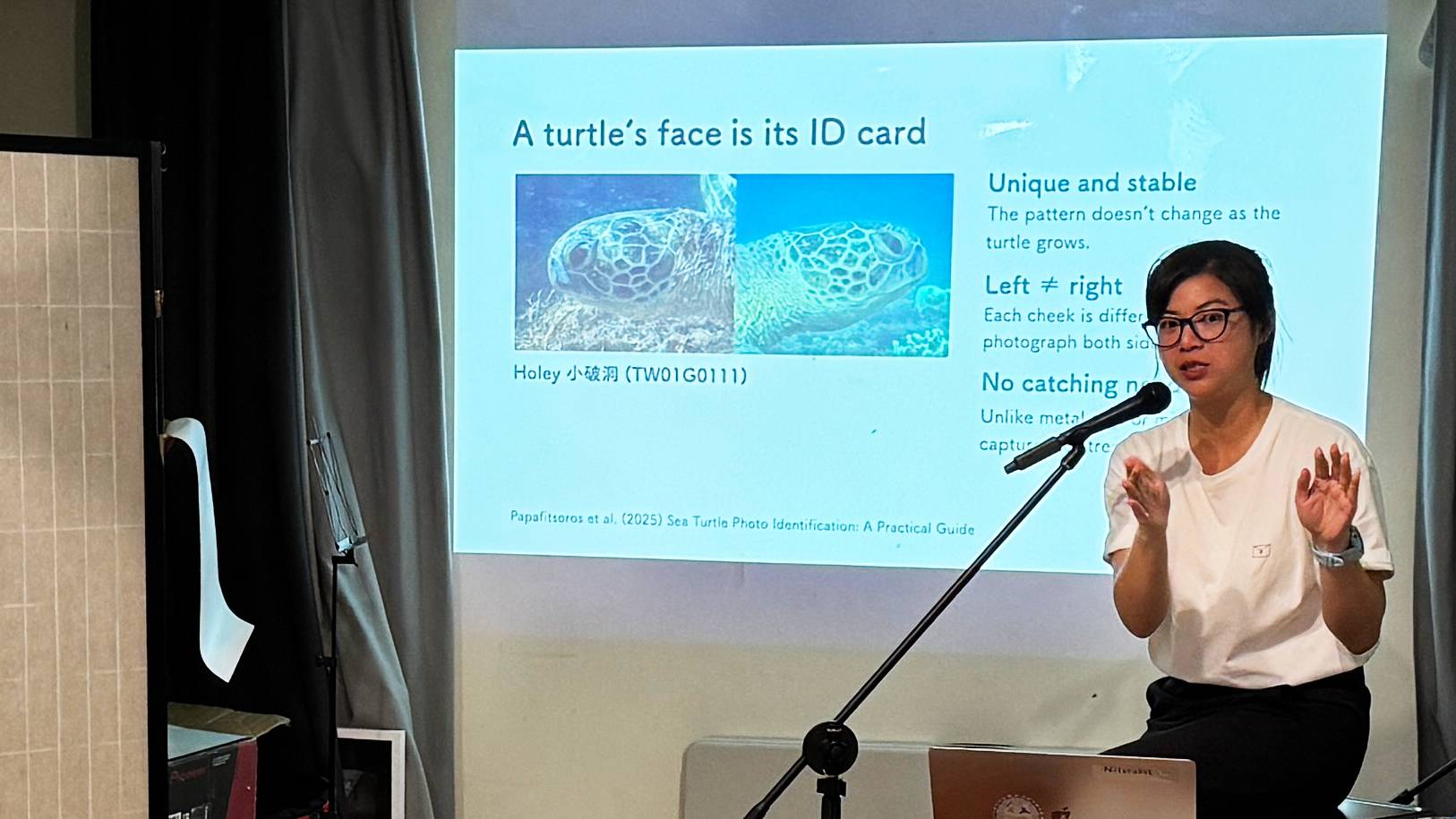
- “A turtle’s face is its ID card.” The entire logic behind TurtleSpot Taiwan and TurtleFinder as participatory science initiatives is that for green sea turtles (Chelonia mydas), each turtle’s face is indeed unique in their scale patterns — even differing from their left cheek and right cheek. This is the logic that allows photographs from divers and tourists to be aggregated to help scientists identify and track individual sea turtles not just in Taiwan, but across their migration and movement paths. An “ID card” was a straightforward, simple metaphor that everyone in the audience could understand.
- “Hot Girls, Cool Guys.” While not her own invention, Chialing shared this popular expression used by sea turtle researchers when doing public outreach. It’s an easy way to refer to the phenomenon of temperature-dependent sex determination (TSD), where sea turtle eggs that incubate above a certain temperature will be born female hatchlings, whereas below that temperature they will tend to be male hatchlings.
Tell the Data’s Story
In an outreach lecture about the benefits of citizen science, one should probably give some concrete examples of how public participation resulted in real data used for real scientific analyses.
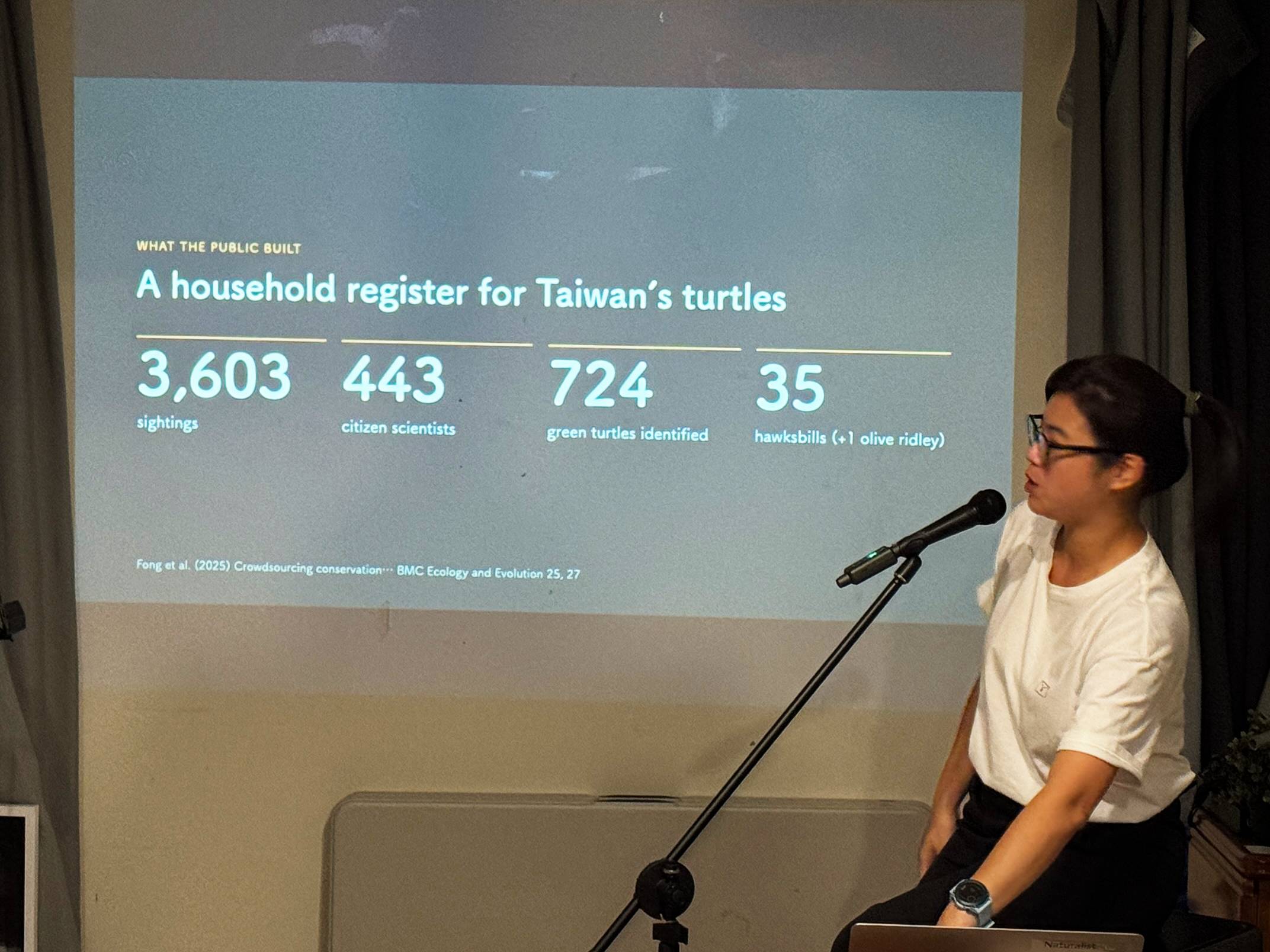
Dr. Fong did exactly that. Because of the 3,000-plus sightings contributed to TurtleSpot Taiwan, researchers were able to identify more than 700 unique green sea turtle individuals here in Taiwan — making connections they never could before. “A household register for Taiwan’s turtles” was the metaphor Dr. Fong used, another very helpful general reference for Taiwan audiences, since instead of a census like other countries, Taiwan government uses a “household registration” (戶口 or 戶籍) database to tabulate who lives where.
So what are some of the discoveries owed to TurtleSpot data? Some turtles ate and fattened up in Taiwan waters but actually nested far elsewhere in the Pacific Ocean, connecting Taiwan local conservation actions to a much larger international picture. Some turtles are increasingly become residents of Xiaoliuqiu, a popular tourist isle in Taiwan’s southwest — possibly because their favorite algae to eat are taking over the formerly healthy coral reefs mentioned in Professor Crystal McRae’s August talk.
We can even track how injured turtles — shells broken by boat propeller strikes — are or are not able to heal over time. That teed up another great memorable conservation message from Dr. Fong: “Turtles can heal, but prevention is key.”
With examples like that, October’s Taipei Science Café was truly a scicomm masterclass held by Dr. Fong — worthy of her nicknames of Miss Sea Turtle / Miss Umigame / 海龜姊姊 as she is known around Taiwan’s marine education circles!
Stay tuned for more of my observations from past and upcoming speakers! And my gratitude to Han-wen Chang 張瀚文 and iesResearch for the encouragement to write up these great ideas to share. See you all around Taipei, and tag me on LinkedIn with your own great science communication 科普 examples of the above principles!
- Read more scicomm best-practices recaps of past Taipei Science Café 台北科普咖啡 guest speakers