Ben Young Landis 楊政達
September 22, 2026
What are some classic #SciComm #科普 principles we can all keep in our toolkit? As a science communication professional who organizes science café events, I am always noticing moments of brilliance from our speakers.
Here are my three observations from our recent Taipei Science Café 台北科普咖啡 hosted at DAYBREAK 破曉咖啡 by New Bloom (www.instagram.com/taipeisciencecafe) — featuring 國立台灣大學 National Taiwan University master’s student River Basham (sites.google.com/view/sjsun/who-we-are), who delighted us on the topic of Burying Beetles 埋葬甲蟲:
Fun Games the Audience Can Play — and Learn From
River’s talk was titled “A House Made of Mouse: Animal Architecture, Thermal Buffering, and Climate Resilience of the Burying Beetle”
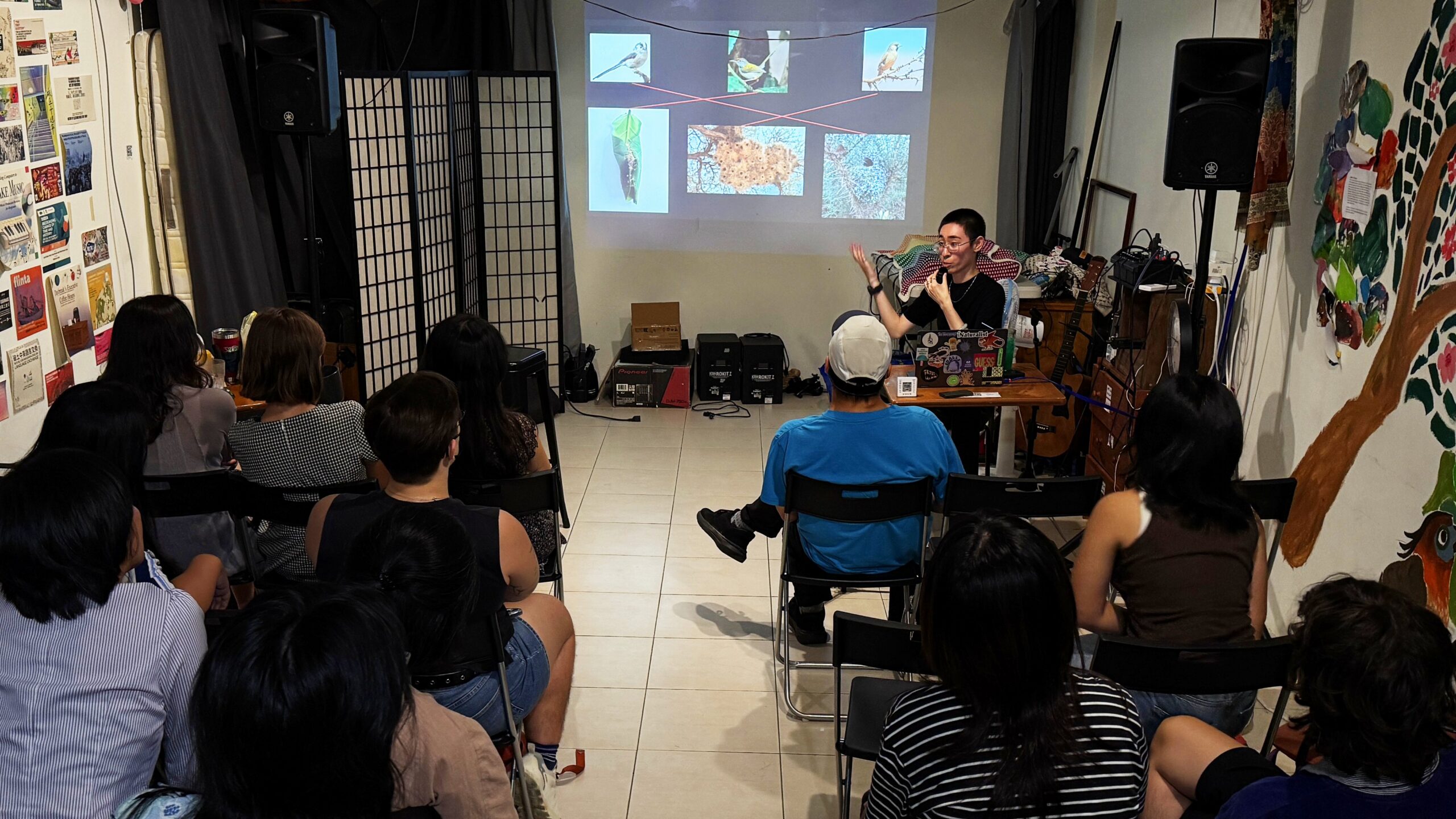
But what the heck are burying beetles and what do we even mean by “animal architecture” or “thermal buffering”? True to their past experience as a kindergarten teacher, River opened their talk with a deluge of fun picture-matching games. Cleverly, these photos of different creatures and their built structures (nests, bowers, towers, or otherwise) were presented in very simple two-by-three matching games. Yet here lies River’s magic.
The matching games was very easy to play — the audience quickly matched each “building” with its “architect” — and that allowed River to quickly pepper the audience many more follow-up questions. “Why?” Why did you say it was this bird?” “Good guess!” “Why this shape?” “What function do you think this shape serves?” “Why did you guess that?”
Like a classroom of kids, everyone’s curiosities were constantly stimulated, trying to decipher the logic of these natural phenomena. And not a single person was tuned out or staring at their phones.
Simple Phrasing For Your Complicated Research Question
After building up the audience’s bank of necessary vocabulary and fundamental concepts, River transitioned to discussing their research focus — in short, why do Nicophorus nepalensis burying beetles contort and press dead mice (or other tiny beasts) into a ball-shaped buffet for their babies? What are the advantages of a rotting flesh-globe as a food source for beetle larvae, versus just a naturally splayed out corpse? How does this connect with the environmental conditions that these dedicated detritivores live in, performing their duties as nature’s cleanup crew even as the planet warms unnaturally?
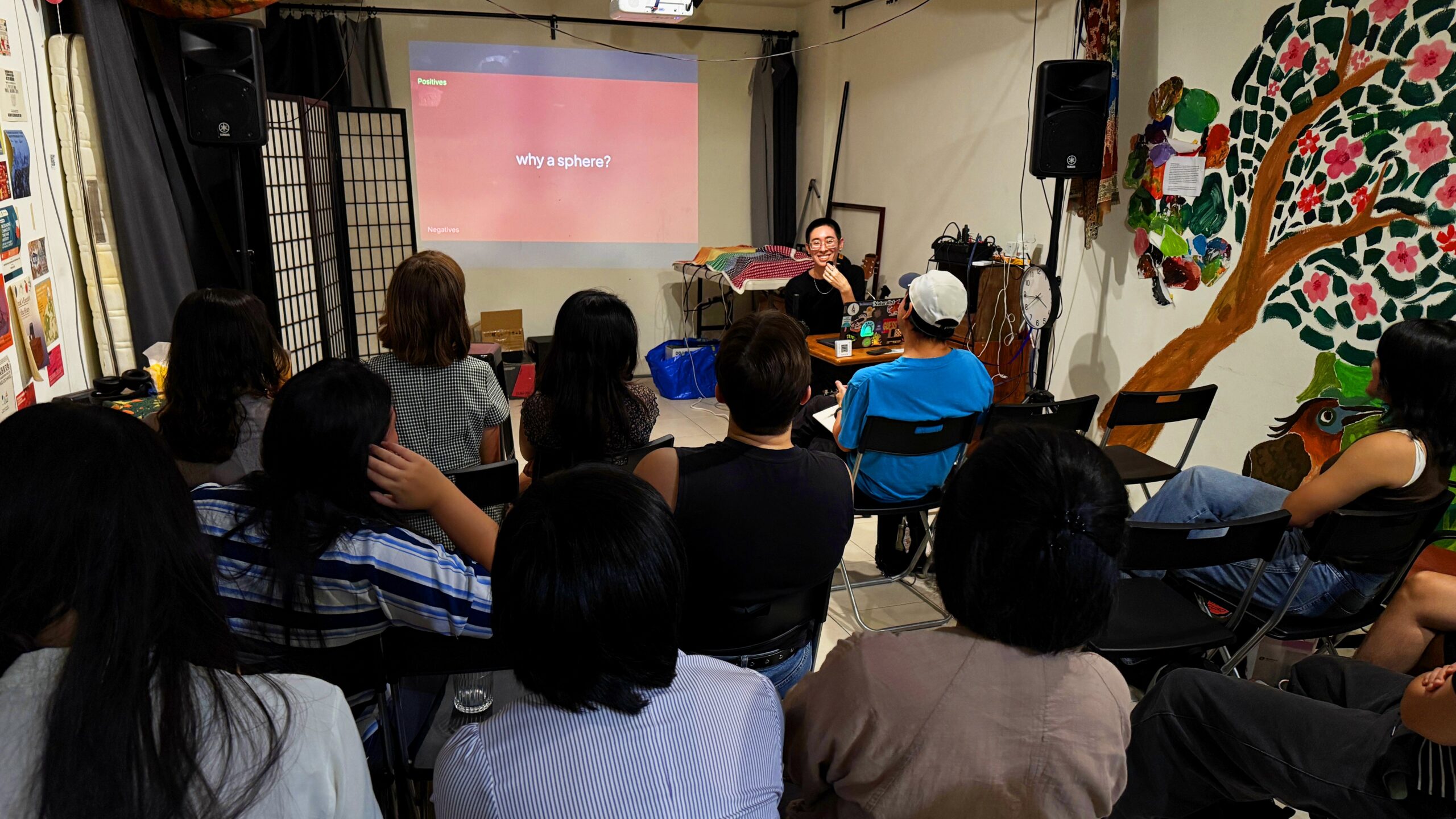
It’s a lot to to ponder, but River’s slide simply asked: “Why a sphere?”
Once again, River called on raised hand after raised hand, first prompting our Taipei Science Café audience to think of why a sphere-shaped food source would benefit our beetle buddies. That was followed by a brainstorm of what negatives a sphere shape might present to the beetles.
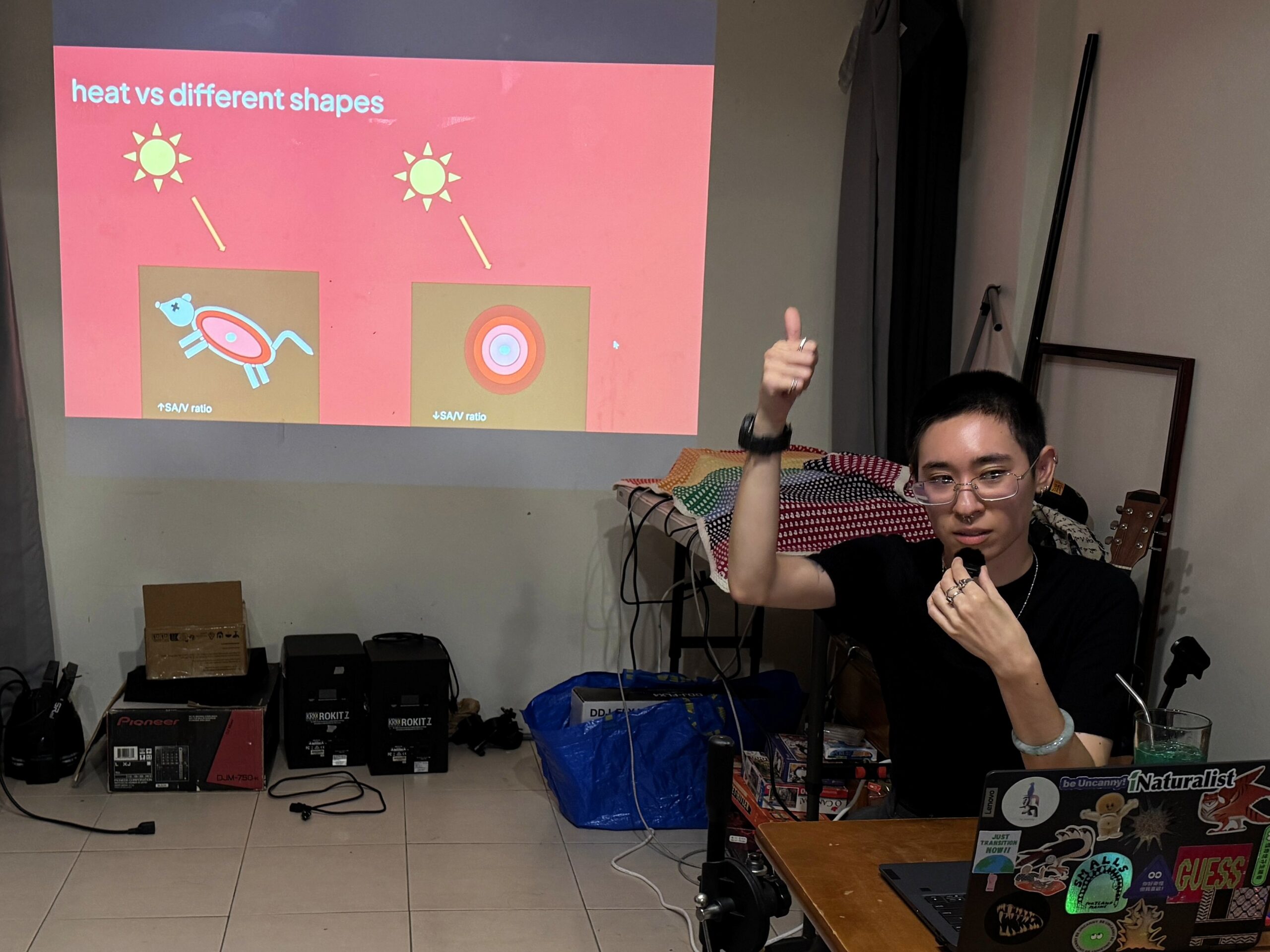
“Spheres are highly studied in biology,” said River as they followed through with the scientific explanations — and validations of our audience’s many spot-on responses.
By boiling down their master’s research question to such a simple phrase, River was able to leverage their incredibly energetic Socratic teaching style, effectively engaging our audience through question-and-response. It’s a scicomm strategy that is delicious, durable, and dispersible.
If You Got Bugs, Bring the Bugs!
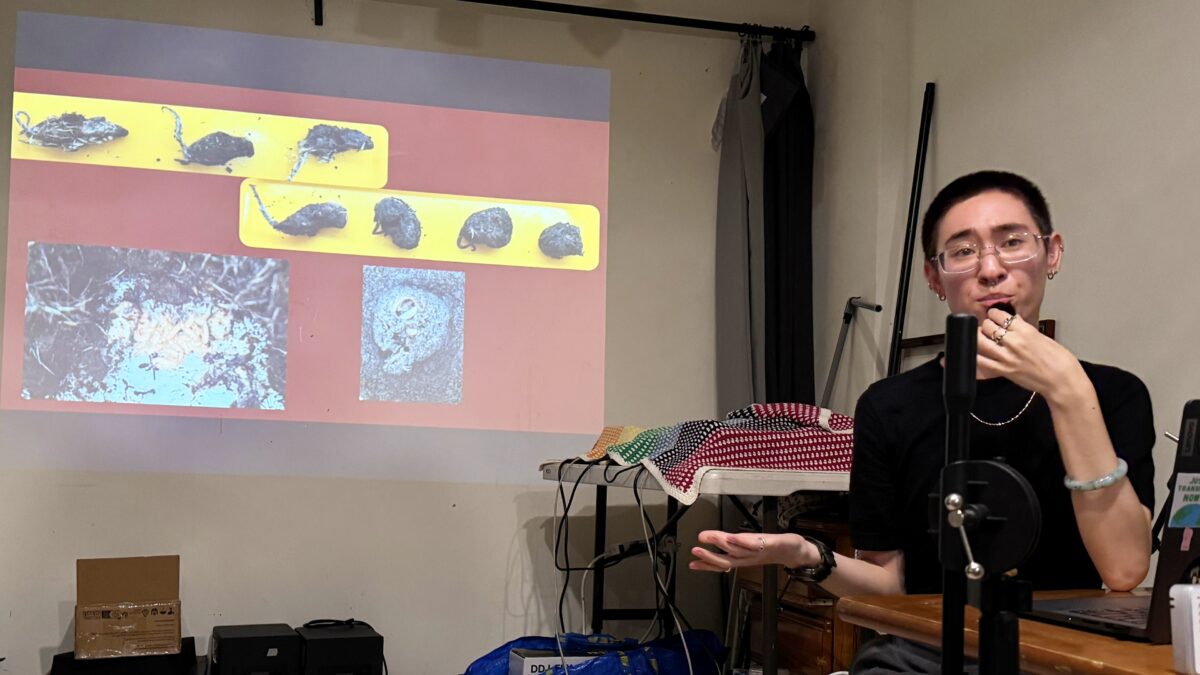
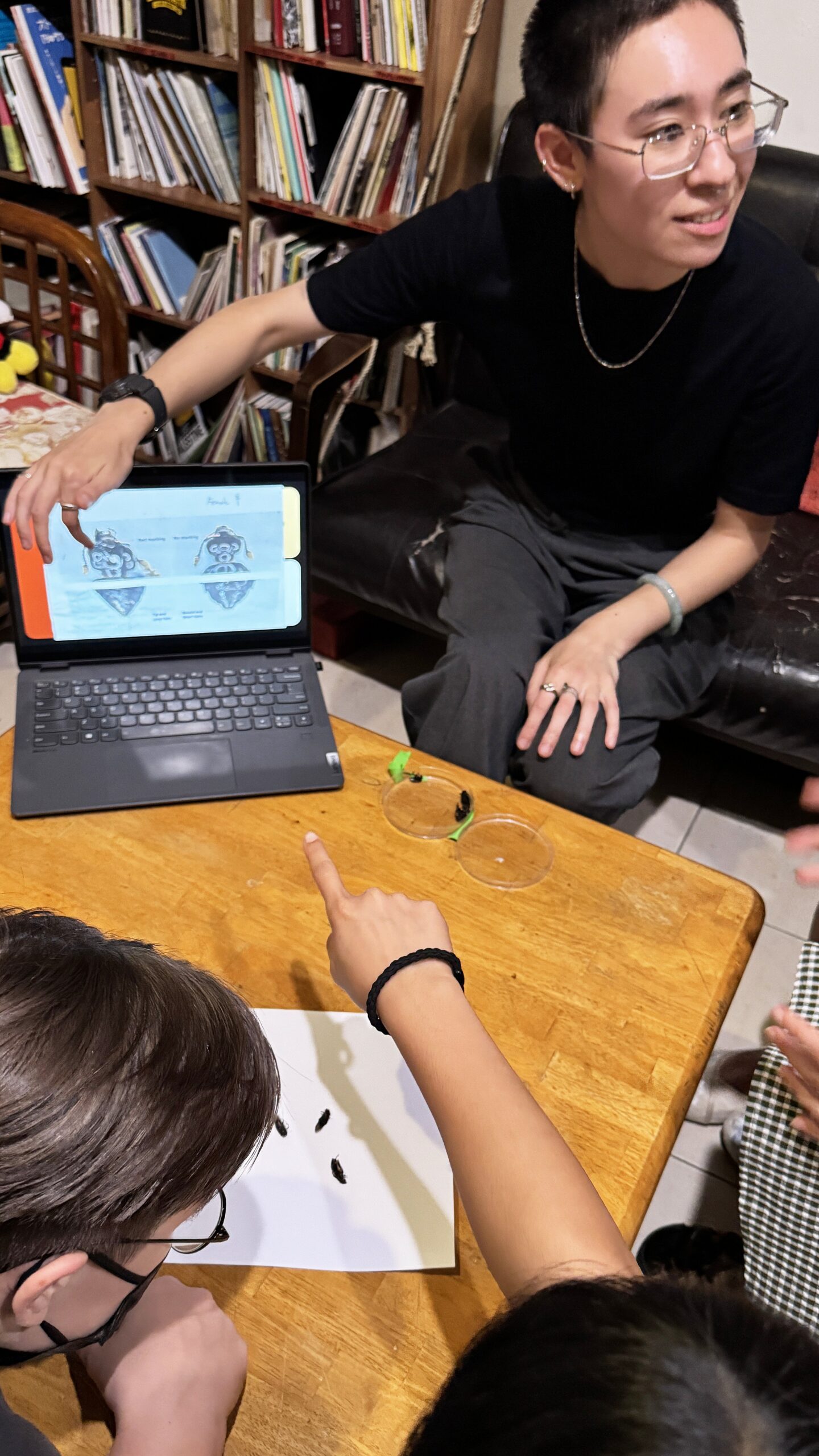
Not every scicomm speaker has the convenience or subject matter to achieve this particular pro-tip — apologies to our quantum physicist friends and others. But as a former entomology student myself, I always say “If you got bugs, bring the bugs!” River was no less the crowd pleaser, bringing a handful of (deceased) burying beetle specimens for audience members to hold and examine. While River displayed a laptop diagram to teach our science café guests how to sex these adult beetles, another guest helpfully held up a smartphone with the flashlight function on to illuminate the tabletop.
An instant entomology teaching lab, right here in our café basement.
Extra Gold Star
I wanted to give one more tout to River’s tour-de-force scicomm performance at Taipei Science Café on September 16.
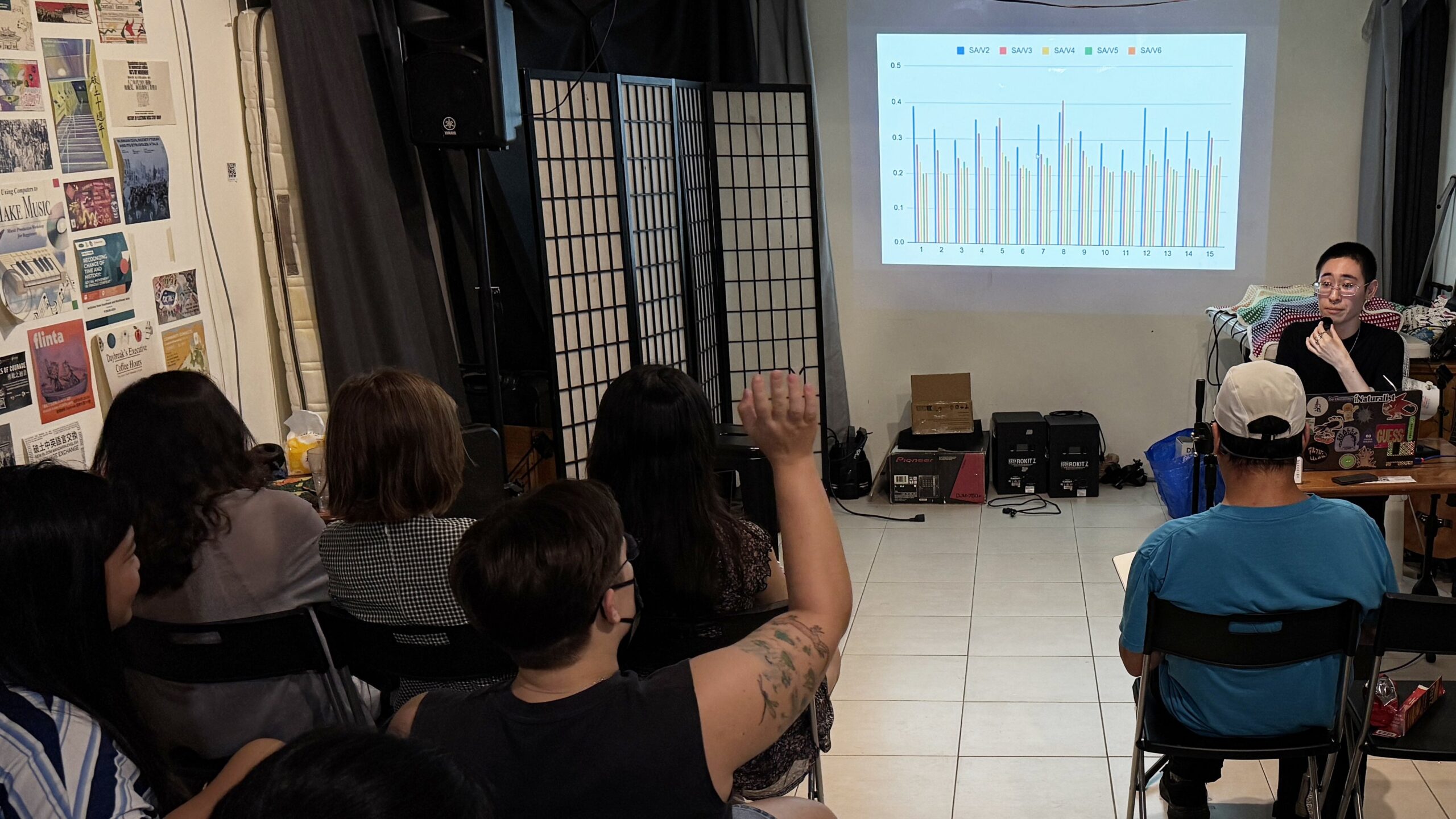
Halfway through River’s talk, I had to step away for a few minutes. When I returned, I saw that River had put up a fairly detailed bar chart up on the screen, and was asking the audience how they would interpret this data.
Typically, such a data slide would be a death knell at a public science lecture. But to my joy, guest after guest raised their hands to offer their guesses at which bar meant what. River ask everyone which cohort (as in which individual mouse-ball of beetle babies) was faring better or worse than the others, during day one versus day five. And the audience was able to follow along and interpreted the graph like it was their own experiment.
It was science education mastery in action — and credit to how River gradually built up the audience’s knowledge and logic base, to a level where folks could successfully read and respond to presented data.
So, extra gold stars for you, River, for dazzling us with your scicomm flex!
Stay tuned for more of my observations from past and upcoming speakers! And my gratitude to Han-wen Chang 張瀚文 and iesResearch for the encouragement to write up these great ideas to share. See you all around Taipei, and tag me on LinkedIn with your own great science communication 科普 examples of the above principles!